

Checking the charging system in 3 steps
On this occasion, we're going to conduct an eminently practical tutorial to check whether any motorcycle's charging system is working properly.
Before starting with the tests, we will briefly define the components:
The alternator

It consists of a rotor with magnets, or a magnetic plate, which rotates around a fixed winding called a stator. Variations in the coils' magnetic field generate alternating current (like the one we have at home). The faster the motor spins, the more voltage we obtain.
The rectifier-regulator

Alternating current isn't very useful on a motorcycle, as it doesn't allow electronic devices to operate. That's why a regulator is placed at the alternator output, which converts alternating current into direct current, with positive and negative currents. This is called current rectification.
At the same time, the regulator ensures that too much voltage does not reach the electrical components, thus protecting them by eliminating excess current through the chassis.
The battery

This is an element that stores energy from the regulator. This way, when the engine is stopped or running at low rpm, we have power to power the starter motor, lights, and other electronic components.
Another very important function of the battery is that of an electrical "shock absorber," filtering the current coming from the alternator and through the regulator, so that the electronic components operate with great precision and stability.

Three-step test
To perform a quick check of the charging system, all you need is a multimeter capable of reading both DC and AC current. We'll proceed as follows:
- We set the multimeter to AC voltage (VAC), disconnect the alternator connector, start the engine, and measure its output. We should get about 40V, which gradually increases as we accelerate (it's essential to consult the workshop manual for each year and model of motorcycle, as this measurement varies greatly). If the alternator is working correctly, we move on to the next test.
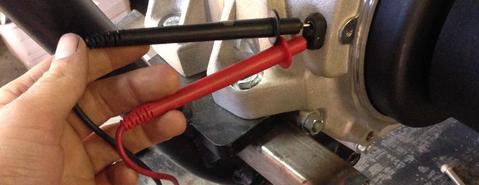
- With the engine off and the ignition off, we measure the DC voltage (VDC) across the battery terminals. It should be 12V or higher. We start the engine and measure again. The voltage should rise to 13V or higher. With this test, we've verified the condition of the battery and the operation of the rectifier. We move on to the next test.

- While continuing to measure as in the previous step, we accelerate and check how the voltage increases, until it stabilizes around 14V even if we accelerate further. This indicates that the current regulator is performing its function correctly. This can also be checked with the motorcycle's own voltmeter, if it has one.

Checking these three points will take no more than five minutes, and will help you determine if the charging system is working properly or if there is a problem with any of the components. As always, consult your workshop manual for the specific values for the motorcycle you are working on.

Frank Burguera
9 comments
Belleza
Thank you .You made it so easy to follow the steps.Have a wonderful day
Thank you .You made it so easy to follow the steps.Have a wonderful day
Chicos, ¡muchas gracias poteste video!
Voilà mon problème j ai vérifié mon stator et il monte à plus de 50v a3000mille tours donc c est bon puis j ai vérifié mon régulateur et la j ai 12volt68 en accélérant j ai changé deux fois mon régulateur pensant que le premier était défectueux et toujour le même problème je ne comprend pas j ai un fatboy de 2000
Tengo ese problema. Me a venido de lujo encontrarte. A sido de casualidad. Tengo una esporter de 1998. Muy bien as explicado. Muchas gracias.🛵
Cordial saludo desde Nicaragua.
Soy Técnico Electrónico y me gustaría aprende sobre Electricidad y Electrónica de Motos tienes manuales de entrena miento en Español.
If the Volta starts at 12.3 then drops to 11.5 which part is the problem.
Hola. Tengo una softail. Arranca bien pero sólo tira de batería. Al agotarse esta se para. Con pinzas a otro vehículo se mantiene en marcha hasta que quitas las pinzas, que se para (a estas alturas su batería ya está ko). ¿Cómo saber si es alternador o regulador?